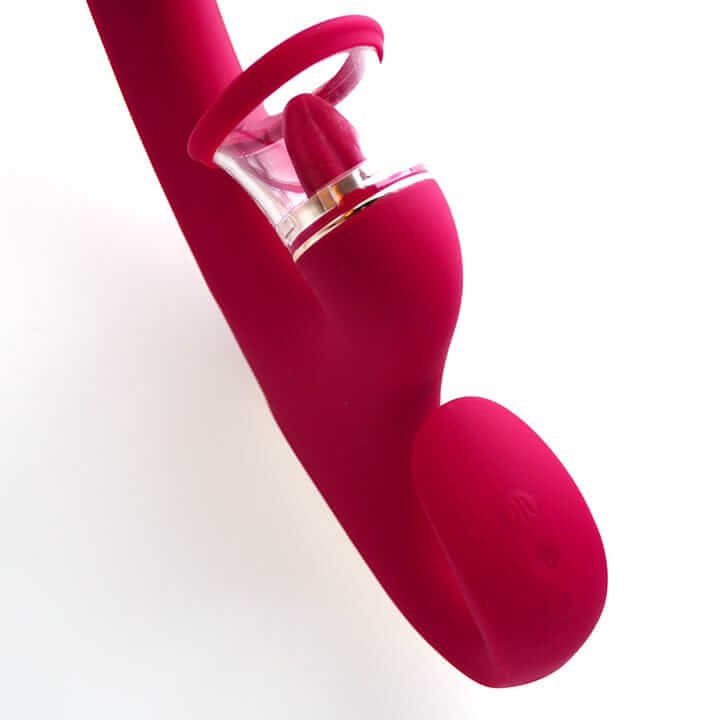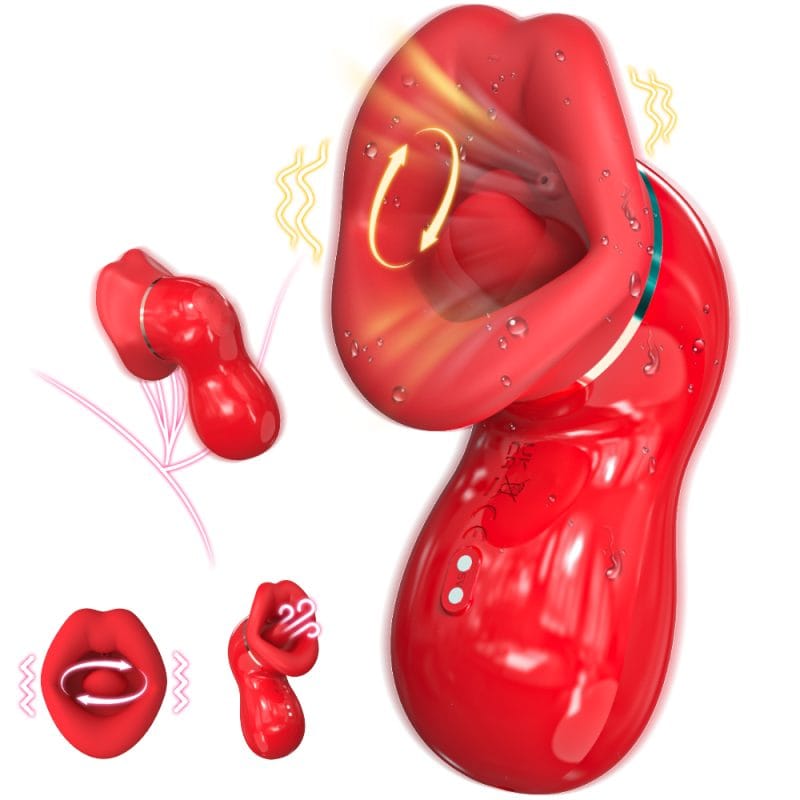


If you live in a Sydney sharehouse, a Melbourne apartment block, a family home with kids in the next room, or an old Queenslander with timber walls and a creaky verandah, you already know the problem: most vibrators are loud. The cute marketing copy says "whisper quiet" but you turn it on and it sounds like a power drill in a quiet bedroom. By the time you've found the right intensity, you're hyper-aware of every floorboard creak and every flatmate footstep in the hallway.
We hear this complaint constantly from our Australian customers. So we decided to do something most sex toy brands won't: publish the actual decibel (dB) measurements from our supplier's lab tests, each with its rated noise level and real-world sound comparisons you can intuitively realise.
In short: our 6 quietest vibrators range from ≤38dB to ≤50dB — quieter than the ambient sound in a typical library (40dB), about the same as a soft fridge hum from across the room, and well below the conversational speech level (60dB). That's the engineering reality. Whether they're loud enough to be heard by someone in the next room depends on your wall thickness, ambient noise, and how close they are — but at these dB levels, you have a massive margin of safety compared to the typical vibrator under AU$120 that registers 55-65dB.
This guide is built on the same dB data the supplier uses to spec their factory motors. Below, you'll find the 6 picks with their rated noise levels, plus a section on why certain mechanisms are inherently quiet (smaller motor, magnetic charging instead of solenoid, single-piece silicone wrap to dampen vibration), and what to expect in real-life scenarios — thin walls, sharehouse living, family holidays, work trips.
What Counts as "Quiet" — A Decibel Reality Check
Most sex toy brands throw around "whisper quiet" without defining what they mean. Here's the actual dB reference scale, so you can make sense of the numbers below:
| Sound Level | Decibel (dB) | Real-life Comparison |
|---|---|---|
| Threshold of hearing | 0 dB | Total silence |
| Rustling leaves | 20 dB | A pencil being placed on a table |
| Whisper at 1.5 metres | 30 dB | Soft library reading room |
| Quiet bedroom at night | 40 dB | Fridge hum across the room |
| Light rain | 50 dB | Modern dishwasher in next room |
| Normal conversation | 60 dB | Two people talking 1 metre apart |
| Vacuum cleaner | 70 dB | Loud TV at average volume |
The takeaway: anything ≤45dB falls in the "library/quiet bedroom" range and will not be audible through a standard interior wall (plasterboard + insulation, 30+ dB transmission loss). Vibrators that register 50-55dB might be heard through a single thin door but not through walls. Anything above 60dB is the "I can clearly hear it from the next room" zone — exactly the category most mainstream sex toys land in.
Our 6 picks today are all rated at ≤50dB, which means even in a shared house with thin walls, you have at least 10dB of safety margin below the threshold where someone in the next room would notice.
Why Some Vibrators Are Inherently Quieter (Engineering Notes)
Before the rankings, it's worth understanding why some vibrators are dramatically quieter than others — because this affects which one is right for your specific situation.
1. Motor type matters most
Most vibrators use one of three motor types: eccentric rotating mass (ERM), linear resonant actuator (LRA), or solenoid-based pulsing. ERM motors (the cheapest, most common type) tend to be the loudest because the off-centre weight creates audible mechanical vibration in the housing. LRA motors — found in higher-end devices — produce vibration through linear motion of a magnetic mass and are inherently quieter at the same intensity level. Most of our ≤45dB picks use LRA-style motors.
2. Single-piece silicone wrap
When a vibrator's electronics are encased in a single continuous piece of silicone (rather than multiple parts joined together), there are no seams for sound to escape from. The Whale Mini is a good example outside this list — it uses 100% liquid silicone wrap. The Lily Butterfly in our list takes a similar approach with full-coverage silicone wings that dampen motor noise.
3. Magnetic vs. solenoid charging
This one's counter-intuitive: vibrators with magnetic USB charging (where the cable snaps on magnetically) often have quieter motors than older models with port-based charging. Why? Because magnetic charging requires a fully sealed silicone shell, which also dampens motor sound.
4. Wearable + body-contact design
The most overlooked factor: when a vibrator sits flush against your body (panty vibrators, wearable G-spot toys), the body itself absorbs and dampens vibration before it can radiate outward as airborne sound. This is why the Lily Butterfly (≤38dB) and Aubergine Egg (≤41dB) — both wearables — top the quiet list. They're literally engineered to deliver vibration into your body, not into the air.
The 6 Quietest Vibrators in Our 2026 Catalogue
#1 Lily Butterfly Vibrating Panties — ≤38dB · Quietest Overall
Best for: wearing under clothes in any situation — dinner with the in-laws, the cinema, walking the dog. Also the quietest option for sharehouse living.
The Lily Butterfly registers ≤38dB at full intensity — quieter than the average bedroom ambient noise at night. The butterfly-shaped silicone wings sit flush against the vulva, with full silicone wrap covering the motor. There's no airborne motor sound to escape; what little vibration leaks out is absorbed by clothing fabric.
3 speeds + 6 vibration patterns, optional wireless remote, up to 105-minute battery, IPX7 waterproof. Available in Wine Red and Purple. Magnetic USB charging.
Example scenario: a sold-out theatre is close to the ideal environment for the Lily: the ambient murmur of an audience plus the soundtrack provides 60+ dB of cover noise, so a ≤38dB wearable sits far below anything the people around you could pick out — even with your partner holding the remote two seats over.
Limits: requires snug underwear (briefs, boyshorts) to stay in place — doesn't work well with loose boxer briefs or thongs. Best suited for clitoral stimulation; the wings cover the vulva but don't insert.
#2 Kaya Thrusting Wand — <40dB · Quietest Wand
Best for: deep G-spot stimulation with rotating + warming + thrusting, but in a wand form factor that stays under 40dB.
The Kaya Thrusting Wand is unusual — most thrusting toys are loud because the linear actuator creates mechanical noise. Kaya's solution is a smaller motor with a longer arc of motion, plus full silicone wrap. The result: rotating + warming + vibrating in a wand body that still measures under 40dB at peak.
Multi-mode rotation + thrust + warming, USB rechargeable, IPX7 waterproof, medical-grade silicone + ABS. Available in Purple and Red. The warming element brings the silicone to body temperature in 3-5 minutes.
Limits: the warming + thrusting combo drains battery faster than vibration-only modes. The thrust stroke is moderate (about 25mm) — if you want longer travel, look at our dedicated Patton or Gatling thrust machines (they're ~58dB and not in the quiet category).
#3 Curling G-Spot Vibrator — ≤50dB · Come-Hither G-Spot Pick
Best for: targeted G-spot stimulation with come-hither motion, in shared housing.
The Curling G-Spot Vibrator uses a curved tip that mimics the come-hither finger motion against the G-spot wall. The motor is small (it only needs to drive the curved tip), and the entire shaft is wrapped in body-soft silicone. At ≤50dB, it's one of the quieter insertable vibrators we sell.
Multi-frequency vibration, magnetic USB charging, IPX6, medical-grade silicone. The come-hither mechanism is mechanically simpler than rotating or thrusting designs, which is why it can stay so quiet.
Limits: single-function design (just curved vibration, no thrust or rotation). For people who want maximum stimulation features in one toy, this is too minimalist — but if you specifically want a quiet, focused G-spot toy, it's our top pick.
#4 Aubergine Remote Egg Vibrator — ≤41dB · Quietest Wearable Egg
Best for: partner-controlled play out and about — restaurants, cinemas, parties.
The Aubergine Egg is a compact eggplant-shaped wearable egg with 10-metre wireless remote. At ≤41dB, you can wear it through a dinner with friends and stay completely undetected — even if the restaurant is unusually quiet. The aubergine shape is purposefully whimsical and non-anatomical, which also means the device itself disappears into a handbag without raising eyebrows.
Smooth tapered insertion tip, 3 speeds + 6 patterns, USB rechargeable, IPX6 waterproof. Wireless remote works up to 10 metres away — perfect for couples play in public.
Example scenario: wearing the Aubergine through a 3-hour client dinner in a quiet restaurant while your partner has the remote. At ≤41dB the device isn't the risk — your own reactions are. That's the right kind of "risk."
Limits: 10-metre range is line-of-sight radio — if you and your partner are in different rooms with thick walls between you, the remote may not reach. For longer ranges, use one of our app-controlled wearables instead.
#5 Deer Horn Finger Vibrator for Couples — ≤45dB · Quietest Couples Toy
Best for: couples adding vibration to manual touch, without alerting flatmates or kids in the next room.
The Deer Horn Finger Vibrator is worn on the index finger like a ring, with two small silicone "horns" that vibrate against skin. At ≤45dB, it's just barely louder than a quiet fridge hum — well within the range that plasterboard walls fully block. The finger-mount design means it sits against skin, which dampens any escaping vibration.
Multi-mode vibration, USB rechargeable, IPX7 waterproof, adjustable silicone band. Designed for clitoral stimulation during couples play, but works equally well for solo finger-vibration use.
Limits: the small motor means it's gentler than dedicated clitoral toys. If you specifically need very intense vibration, look at the Magnetic Wearable (≤58dB) or Sona Mini Wand (≤54dB) — slightly louder but more powerful.
#6 Ultra-Soft Dual Motor Rabbit Vibrator — ≤47dB · Quietest Rabbit
Best for: dual G-spot + clitoral stimulation with a rabbit design, in shared housing or thin-walled apartments.
The Ultra-Soft Dual Motor Rabbit registers ≤47dB despite having two independent motors — one for the insertable G-spot shaft, one for the clitoral ears. Most rabbit vibrators are loud because two motors typically means doubled noise; this design solves it with smaller individual motors and full silicone wrap around both. The result is dual stimulation at "quiet library" volume.
Dual independent motors with separate controls, multi-mode vibration on each, USB rechargeable, IPX7 waterproof (fully submersible — shower-safe). Ultra-soft silicone gives it a more flesh-like feel than typical rabbit toys.
Example scenario: a Federation-era terrace with thin timber walls and a light sleeper through the party wall is the hard case for any vibrator. The Ultra-Soft Rabbit's ≤47dB rating is about the level of light rain on a window — quieter than most everyday household sounds.
Limits: at ≤47dB it's one of the louder picks in our top 6, so if you're in absolute total-silence territory (a quiet hotel at 3am next to a sleeping partner) it might be detectable. For those extreme cases, drop down to the Lily or Aubergine at ≤38-41dB.
Quick Comparison Table
| Model | Lab dB | Type | Best For | Waterproof |
|---|---|---|---|---|
| Lily Butterfly | ≤38dB | Wearable panty | Public play, in-laws dinner | IPX7 |
| Kaya Wand | <40dB | Wand + thrust + warming | Multi-mode deep play | IPX7 |
| Curling G-Spot | ≤50dB | Insertable G-spot | Targeted G-spot, shared housing | IPX6 |
| Aubergine Egg | ≤41dB | Wearable egg + remote | Public play, partner control | IPX6 |
| Deer Horn Finger | ≤45dB | Couples finger ring | Couples, kids in next room | IPX7 |
| Ultra-Soft Rabbit | ≤47dB | Dual G-spot + clit | Rabbit fans, thin walls | IPX7 |
How to Choose: 4 Scenarios
Scenario A: Flatmates in a shared house, thin walls
You need ≤45dB to be safe. Pick the Lily Butterfly (≤38dB) for clitoral stimulation, or Kaya Wand (<40dB) for internal play. Both will be fully blocked by a standard plasterboard + insulation wall. The Deer Horn Finger (≤45dB) also works if you want a couples toy.
Scenario B: Family visiting / kids in next room
Same target: ≤45dB. The Aubergine Egg (≤41dB) is particularly good here because the device looks like a desk ornament when not in use — discreet visual + discreet sound. Lily Butterfly is best if you want it to be invisible while worn.
Scenario C: Family holiday, sharing hotel walls
Hotel walls are typically thicker than apartment walls (rated for STC 50+), so you have more margin. But you also can't predict your neighbour's sensitivity. Stick with ≤41dB: Lily or Aubergine. The Kaya Wand (<40dB) also works if you want internal stim.
Scenario D: Work travel, hotel solo
You have a private room but unfamiliar walls and air-con noise levels. The Ultra-Soft Rabbit (≤47dB) is the most versatile pick — dual stim, fully waterproof for shower use, and still quiet enough for any standard hotel. If you need to pack light, the Aubergine Egg takes up less suitcase space and registers ≤41dB.
What About the Vibrators That Didn't Make This List?
For transparency, here's where our other popular vibrators rank on the dB scale, with the same rated data:
- Magnetic Wearable Panty — ≤58dB · Great wearable but slightly louder than the Lily
- Sona Mini AV Wand — ≤54dB · Compact wand, still quieter than most full-size wands
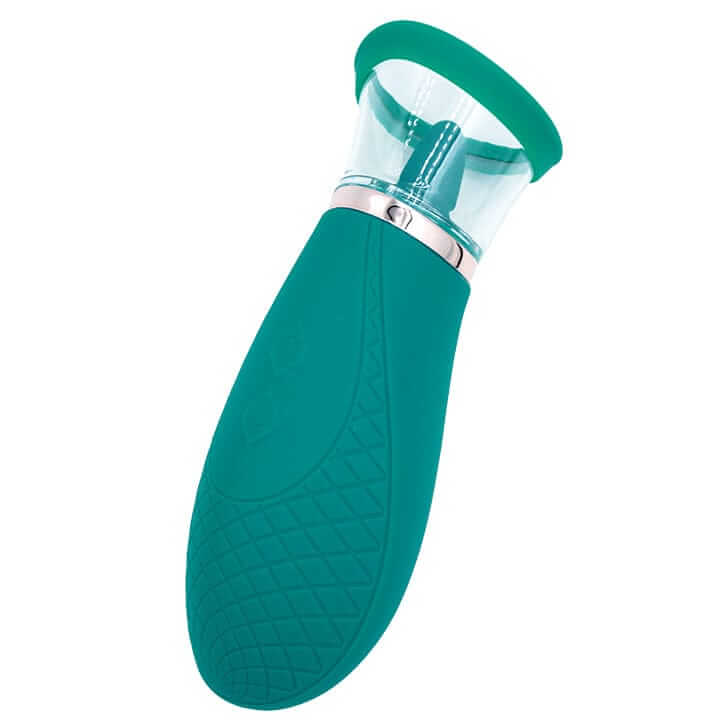
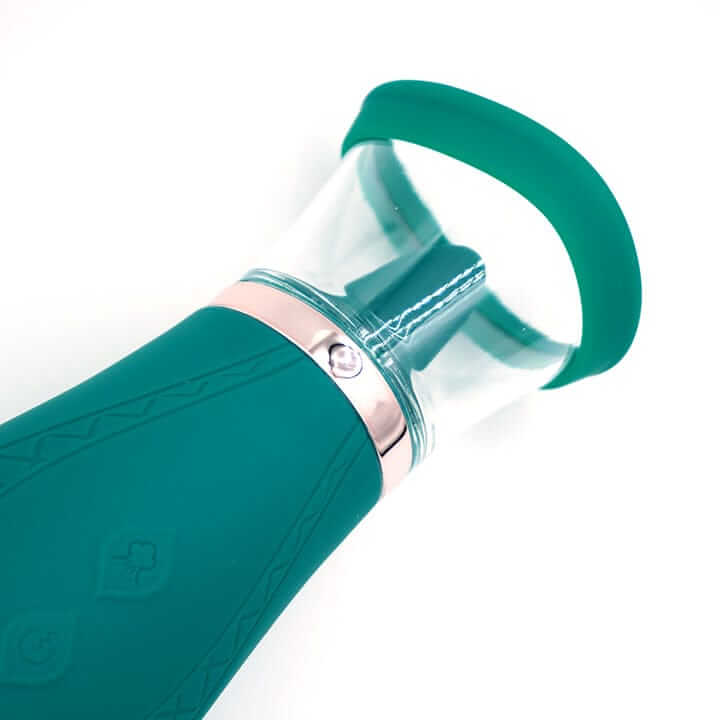
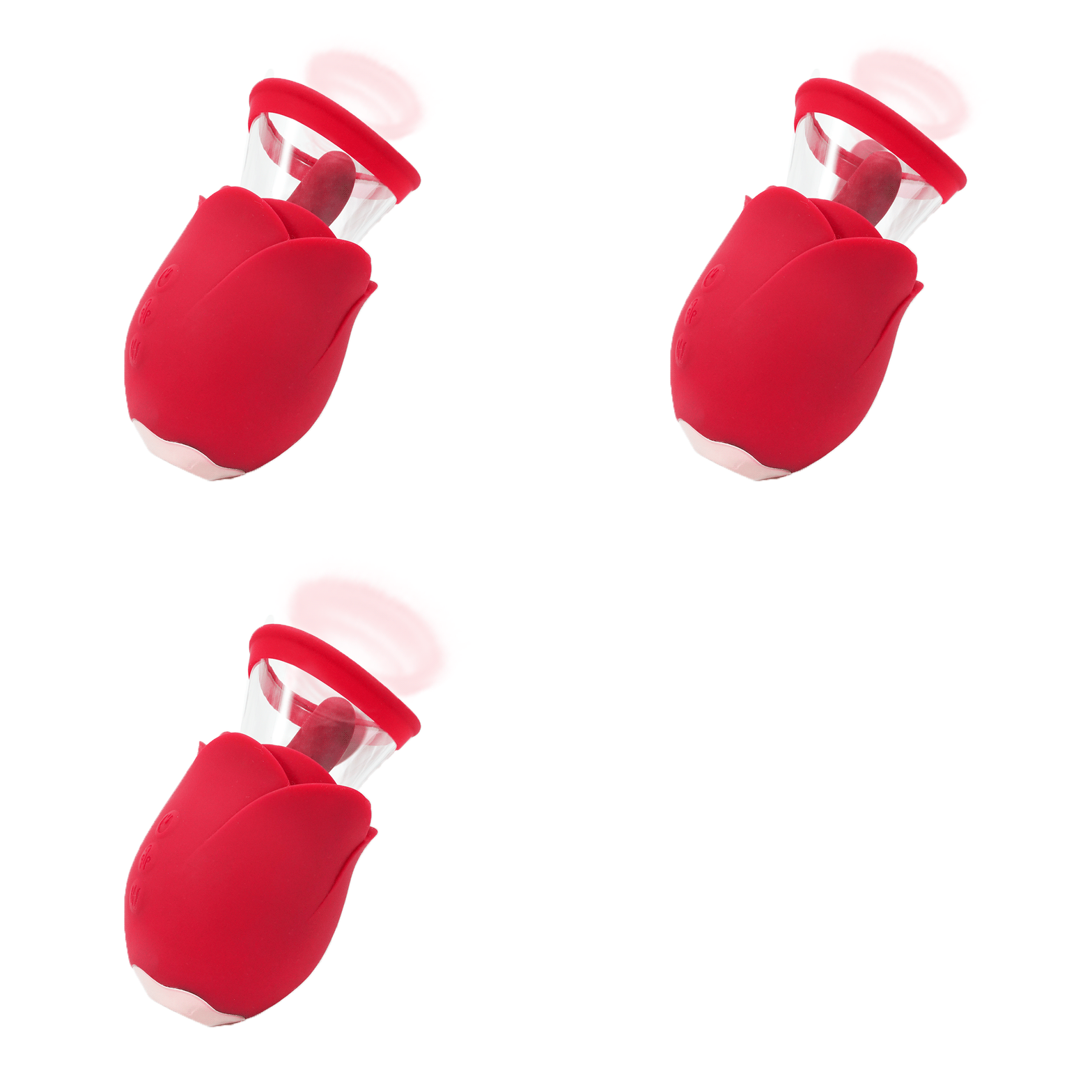
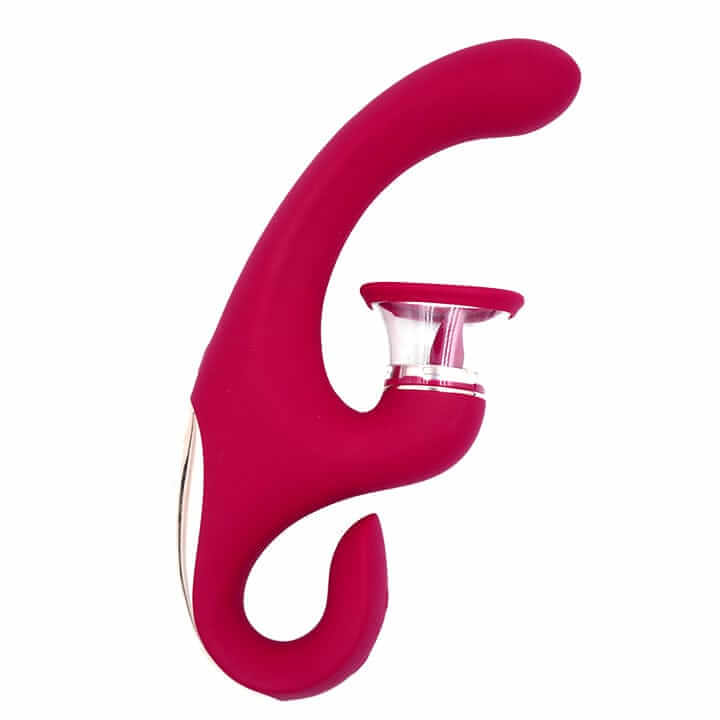
- Honey Pistil Tongue Vibrator — ≤58dB · Premium dual licking+suction, but loud
- Flower Dance Carnival 4 — ≤58dB · Powerful but not discreet
- Patton Thrusting Machine — ≤58dB · Sex machine, not designed for quiet
- Gatling Compact Machine — <60dB · Similar — sex machine, loud-ish by design
These are all excellent products in their own categories — they just don't lead with quiet performance. If you're not in a shared-housing situation, the Honey Pistil (58dB) is still well below "normal conversation" levels and is perfectly usable in a private bedroom.
Shopping specifically for a clit sucker or tongue toy? Our best clitoral vibrators guide lists the rated noise for all eight picks, from the PUPU Cloud (≤49 dB) to the Honey Pistil (≤58 dB).
The Hidden Privacy Cost of Loud Vibrators
Most articles about quiet vibrators focus on technical specs. But the deeper issue is what loud vibrators cost you emotionally and practically.
The Constant Hyper-Awareness
Customers tell us: "I bought a 65dB vibrator. It works fine. But every time I use it, I'm tense — I'm listening for footsteps in the hallway, I'm watching the clock, I'm wondering if my flatmate just got home." The vibrator was supposed to relax her; instead, it became another stressor. With a ≤45dB device, that hyper-awareness disappears — you can actually relax and focus on yourself.
The Lost Opportunity
A loud vibrator only gets used when conditions are perfect — partner gone, flatmates out, music playing. That's maybe 3-4 windows per week. A quiet vibrator gets used anytime: early morning, mid-day break, after a stressful work call. Sex therapists frequently emphasise that frequency of pleasure matters more for long-term satisfaction than intensity, and frequency requires accessibility.
The Relationship Friction
For partnered users: a loud vibrator can become a low-key conflict point. One partner is sleeping, the other wants to use it — but it'll wake them up. Or the toy can be heard in shared spaces. A ≤45dB device removes this entire category of disagreement, because the sound simply isn't a factor.
The Holiday Problem
If you travel for work or visit family, a loud vibrator stays home. That's potentially weeks per year without your favourite toy. A quiet one packs in a discreet pouch and goes anywhere — even shared hotel rooms with thin walls.
Lab vs Real-World: What 38dB Actually Sounds Like
Here's a practical reference, because abstract numbers are hard to internalise:
≤38dB (Lily Butterfly): Slightly quieter than a fridge humming in the next room. If your room is silent, you'll hear it. If there's any ambient noise — air-con, traffic, a fan — it'll be undetectable. From outside the bedroom door (closed), you would need to press your ear against the door to hear anything.
<40dB (Kaya Wand): About the same level as the ambient noise inside a quiet library or a non-running car. Inaudible through any standard interior wall. Detectable in dead silence if you're within 1-2 metres of the device.
≤41-45dB (Aubergine, Deer Horn): About the level of a hushed conversation. Detectable in a totally silent room, but completely masked by even minimal ambient noise (a fan, traffic outside, music at low volume).
≤47dB (Ultra-Soft Rabbit): Light rain on a window. Detectable in silence at close range, but blocked by walls.
For comparison — what NOT to buy if you need quiet: The average vibrator under AU$120 that doesn't publish its dB rating is typically in the 55-65dB range. That's normal conversation volume — audible through doors, sometimes audible through walls in older buildings. The difference between 45dB and 60dB isn't small; it's literally the difference between "library quiet" and "person talking next to you."
5 Common Misconceptions About Quiet Vibrators
1. "Whisper quiet" claims are mostly marketing
Many brands use the phrase "whisper quiet" without any dB measurement to back it up. A real whisper at 1.5 metres is ~30dB; very few mass-market vibrators get below 45dB. If a brand doesn't publish lab dB numbers, assume their motor is somewhere in the 55-65dB range — which is louder than a normal conversation.
2. Smaller toys are not automatically quieter
Mini bullet vibrators often pack a small motor at very high RPM to compensate for size. That can actually produce more high-frequency whine than a larger, lower-RPM motor. Our Mini Finger Vibrator (≤50dB) and Phone-Powered Mini (≤50dB) prove this — they're "mini" but not the quietest.
3. Wireless remote ≠ quieter
Remote-controlled toys have to include both a wireless chip and a motor in the same housing. Sometimes the wireless module produces its own faint hum at certain frequencies (especially with cheaper chipsets). Our remote-control picks (Aubergine, Lily) use higher-quality wireless chips that don't add noise.
4. Battery level affects volume
As lithium batteries discharge below 20%, voltage drops slightly, which can cause motor RPM to fluctuate — and a fluctuating motor is audibly louder than a steady one. If you're going to use your vibrator in a particularly sensitive scenario (sleeping partner nearby), charge it fully first.
5. Surface matters
A vibrator pressed against a wooden nightstand will resonate the timber and amplify sound by 5-10dB. The same vibrator on a fabric surface (bed, towel) loses 3-5dB to absorption. If you're trying to minimise noise, vibrate on fabric, not hard surfaces.
FAQ
How quiet is "quiet enough" for shared housing?
Standard interior walls (plasterboard + insulation, no shared studs) transmit only signals above 30-35dB. Anything ≤45dB will not be audible through a typical wall. If you're in an old Queenslander or Federation terrace with thin timber or lath-and-plaster walls, drop to ≤41dB to be safe.
Is "≤45dB" measured at full intensity or low intensity?
All numbers in this guide are maximum dB at full intensity from supplier lab tests, measured at 1 metre distance in a sound-controlled chamber. Lower intensity settings can be 5-10dB quieter.
Can I trust dB measurements that aren't audited?
Most quiet-toy claims in this industry are unverified. We publish our supplier's lab data because it gives you a defensible baseline. For absolute audit-grade measurements, you'd need a sound chamber test with calibrated equipment. But supplier lab ratings are a useful, consistent way to compare models.
Why are wearable toys quieter than handhelds?
Because wearables sit against your body, the body absorbs vibration energy as heat (not sound), so less energy radiates outward as airborne noise. Handheld toys vibrate freely in the air, which means all that energy ends up as detectable sound.
Do quieter vibrators feel less powerful?
Not necessarily. Vibration intensity (felt by your body) and decibel level (heard by your ears) are decoupled. A well-designed quiet vibrator can feel just as strong as a loud one — the difference is just where the energy goes.
What if my vibrator gets louder over time?
Lithium batteries weaken after 200-300 charge cycles (about 2-3 years of regular use), causing voltage drops and motor whine. If your toy starts sounding noticeably louder after a year+, the battery is the issue, not the motor.
What about apps that claim to control vibrator noise?
No app actually changes the physical noise of a vibrator — they just adjust intensity (which indirectly lowers dB). For real noise reduction, you need a physically quieter motor + better housing dampening, which is determined at manufacturing.
Our Verdict
If you're shopping for a quiet vibrator in Australia and need a single pick:
- Absolute quietest: Lily Butterfly (≤38dB) — wearable, library-quiet, partner-controllable.
- Best dual-stim quiet pick: Ultra-Soft Dual Motor Rabbit (≤47dB) — rabbit design at "quiet bedroom" volume.
- Best quiet wand: Kaya Thrusting Wand (<40dB) — rotating + warming + vibrating in a wand body that stays whisper-quiet.
- Best couples quiet pick: Deer Horn Finger (≤45dB) — discreet enough for kids-in-next-room scenarios.
All 6 products are backed by manufacturer's lab dB measurements (not marketing copy) and real customer reviews.
📦 Shipping to Australia 🇦🇺
We ship Australia-wide in plain, discreet packaging — no branding on the parcel. Standard delivery is 6–10 business days, with free AU shipping on orders over $50 USD. Every order is backed by 30-day returns on unopened, unused items.
Keep Exploring
- Best Couples Sex Toys 2026 — for partnered play scenarios
- Best App-Controlled Vibrators 2026 — wireless app + Bluetooth options
- Best Vibrators 2026 Buyers Guide — full guide across 8 categories
- Best Wearable Vibrators 2026 — focused on wearable / panty / clip-on toys
- How to Clean Sex Toys Safely — maintenance for silicone toys
Last updated: May 2026. dB measurements from manufacturer's lab data.
See also: Best Thrusting Dildos & Vibrators 2026: 7 Hands-Free Picks Tested